

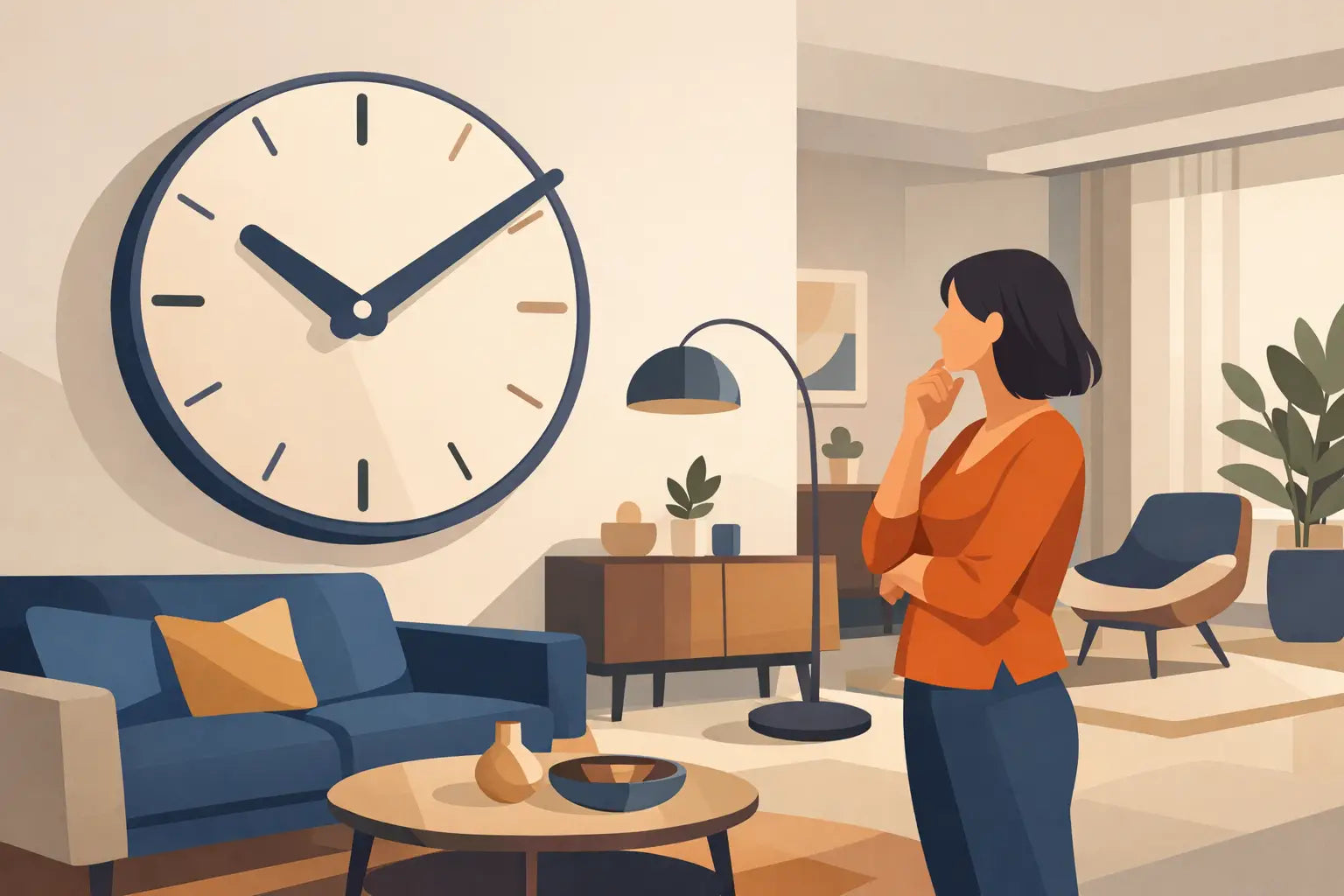
Choosing a design clock for your living room with boldness
An empty wall can instantly make your living room feel bland. Counter that with a designer clock in the living room and the entire space immediately feels more exciting, stylish, and much less predictable. Not just because a clock is practical, but because it’s an object that perfectly blends function and decor.
That's precisely why a clock is much more than a device that tells time. In a living room, it dictates rhythm, draws attention, and completes a corner that would otherwise feel unfinished. Especially if you choose a designer piece with a distinct shape, warm color, or playful detail.
Why a designer clock in the living room does so much
In many interiors, grand statements are made with the sofa, coffee table, or lighting. Understandable, but this often leaves the wall a bit neglected. A designer clock fills that space without appearing heavy. You get impact, but not the cluttered busyness of another shelf, poster, or cabinet.
A clock also works well because it's recognizable. Everyone immediately understands what it is, but a good design adds a twist to it. Think of organic shapes, clean lines, glossy finishes, or a playful retro vibe. This way, you add character without it feeling forced.
There is a difference between a clock that has presence and a clock that screams for attention. That depends on the rest of your styling. If you already have a distinctive sofa, many prints, and striking accessories, a more subdued design often works better. If your living room is quite clean, then the clock can certainly be the bold centerpiece.
Designer clock living room: where to hang it?
The placement is at least as important as the design. A beautiful clock hung incorrectly can quickly feel like it was crammed in. And you don't want that.
Above the sofa is the classic spot, and for good reason. There, a clock automatically gets focus and cleverly fills the width of the wall. Just be sure to choose a size that matches the sofa. A too-small clock will disappear, while an oversized model can overwhelm the seating area.
Above a dresser or sideboard also works powerfully. This adds more layering, as the clock interacts with vases, candlesticks, or a mirror. This is where you get that lovely showroom feel, but without it becoming detached.
Do you have an empty corner that just won't feel cozy? A clock can work wonders. Especially in combination with a floor lamp or plant. The space immediately gets more direction and feels less like a forgotten piece of wall.
What size suits your living room?
This is often where things go wrong. People choose a clock based solely on design, while scale determines at least half of the effect.
In a small living room, a compact to medium-sized model usually works better. This keeps the overall look light. A huge clock in a small space can be cool, but only if the rest is minimalist. Otherwise, it quickly becomes too crowded.
In a larger living room, you can think bigger. A generous wall clock gives substance to the space and prevents a long wall from feeling bare and cold. This works fantastically, especially with higher ceilings or wide walls.
If you're torn between two sizes, usually choose the larger one. A clock should be seen. It doesn't need to hang shyly in a corner as if apologizing for its existence.
Choosing color without playing it safe
A designer clock for the living room doesn't always have to be black, white, or wood-colored. Of course, those are easy choices, but a clock is perfect for adding an exciting accent.
Do you have a lot of neutral tones like beige, sand, white, or taupe? Then a clock in gold, terracotta, dark green, or burgundy immediately brings warmth and zest. Not exaggerated, but striking enough to give the space more personality.
In a modern interior with lots of black and clean lines, a clock with a glossy finish or a soft, round shape can create balance. This softens the harshness a bit. The opposite also works: in a soft, serene living room, a graphic or dark model can add that missing edge.
The cleverest trick is repetition. Let the color of your clock recur in a vase, candlestick, poster, or cushion. Then it doesn't feel like a separate object, but part of a style narrative.
Which clock style suits your look?
Not every clock does the same for your interior. The style must match the ambiance you want to create, but it doesn't have to be an exact match. A small contrast is precisely what makes a living room interesting.
Modern and sleek
Do you like clean, calm, and a bit gallery chic? Then clocks with simple lines, minimalist dials, and clear shapes work well. Think fewer frills, more silhouette. This keeps your living room fresh and stylish.
Playful and trendy
If you want your interior to feel a bit cheerier and less serious, then striking shapes, funky colors, and surprising details are your best friends. A clock can certainly be a bit fun. This immediately brings energy to the space.
Retro with a wink
Retro clocks bring warmth and character. They work well in living rooms where wood, soft fabrics, and round furniture come together. Don't choose something too outdated, but rather a design that mixes vintage feel with a fresh look.
Luxury and glam
Gold, gloss, marble look, or sculptural details can instantly give a living room more allure. Just be careful that it doesn't become too neat. It's better to combine luxury with something light, so it remains exciting.
Combining a designer clock with other wall decor
Not every clock has to hang solo. Sometimes, the combination with other wall items is much stronger. Think of a mirror, art print, or small wall ornament. Then you build a composition that feels more playful than a single object in the middle of the wall.
There's only one rule: let the clock breathe. If everything hangs too close together, you lose the statement. Give each item space, so the eye still understands where the focal point is.
Asymmetrical styling often works surprisingly well. So, not everything neatly centered, but a little looser and airier. That feels more modern and less predictable.
Material makes all the difference
When it comes to a designer living room clock, many people first look at shape and color, but material matters just as much. Metal often feels sleeker and more modern. Wood brings warmth. Glass or high-gloss gives more luxury and light reflection.
If you want a cozy living room, warm materials are almost always a safe winner. If you're looking for more punch and contrast, then metal or a glossy finish often does more. It also depends on how much texture is already in your interior. A space with many soft fabrics can benefit from something smoother and harder.