Living room mirror: how to add flair to your space
A good living room mirror is not a trivial matter. It's one of those items that instantly adds more light, more depth, and more style to your space. And no, we're not talking about a modest mirror that's just hanging there because there was an empty wall. We're talking about a mirror that truly enhances your interior.
In the living room, you want atmosphere, character, and a bit of wow. That's precisely why a mirror is so powerful. It catches daylight, makes colors more vibrant, and instantly makes a corner that once felt a bit dull more interesting. But – and that's the catch – not every mirror works equally well in every spot. Shape, size, height, and what it reflects make all the difference.
Why a living room mirror always works
A mirror is one of the smartest home decor tricks if you want quick results. Especially in a living room where you often live, relax, entertain guests, and simply see a lot. What a mirror does there is almost like cheating. The space appears larger, a dark corner feels brighter, and your interior gains extra layering without having to undertake a major renovation.
This effect works particularly well in apartments, narrow living rooms, or spaces with windows on only one side. If you hang a mirror opposite or diagonally next to a window, you immediately capture more light. If you already have a bright living room, a mirror adds extra sparkle and more depth. Also nice: a mirror gives decorations a double stage. A beautiful vase, a striking lamp, or a playful candlestick suddenly gets extra attention.
The best spot for a living room mirror
Choosing the right spot is everything. A mirror that is perfect in design but hangs on the wrong wall can quickly feel unsettling or simply useless.
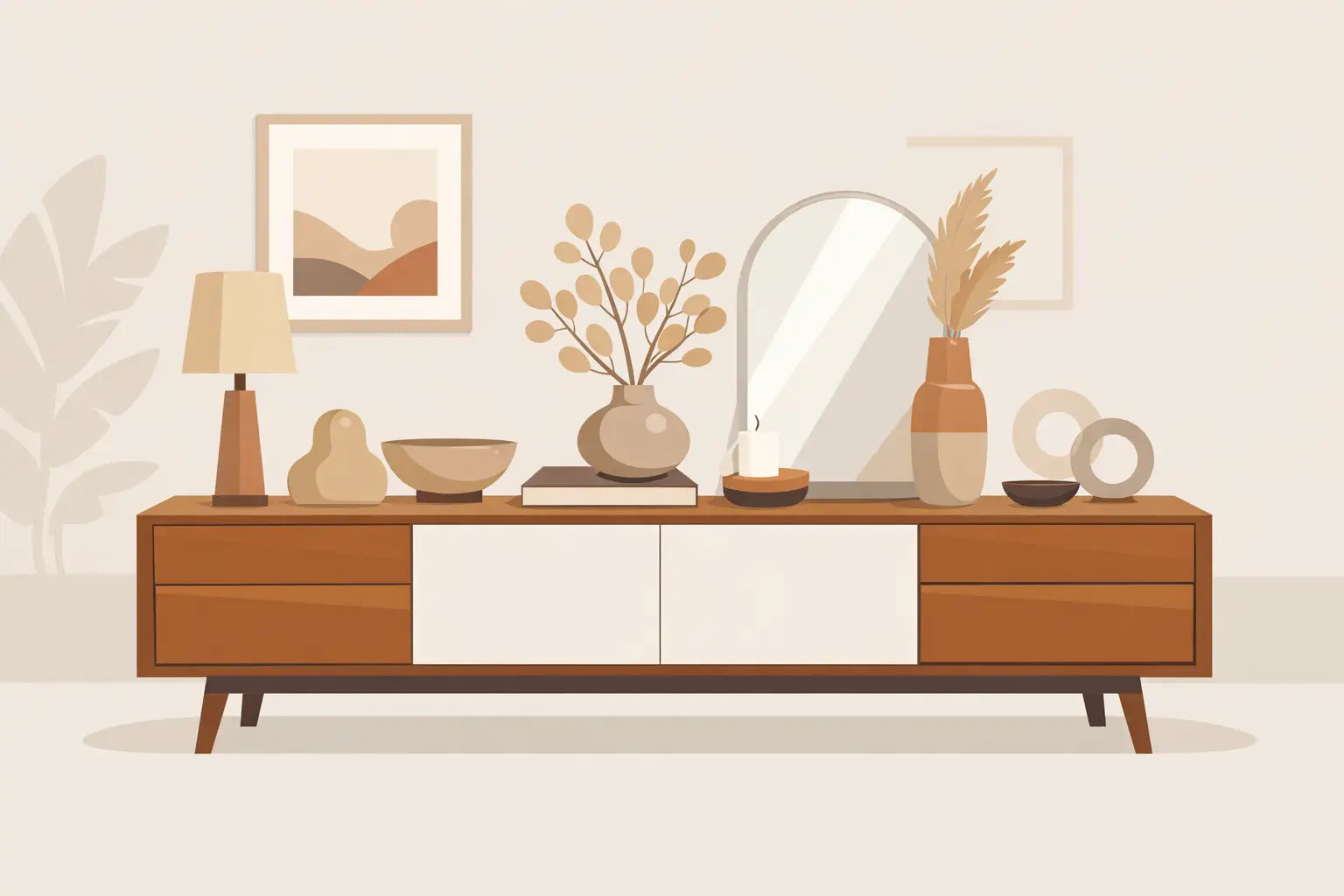
Above a sideboard is almost always a good move. You create height, turn that wall into a real style moment, and can easily combine it with candlesticks, vases, or a stack of coffee table books. This also works well above a side table, especially if you let the mirror align somewhat with the width of the furniture. This creates a calm and chic look.
Placing a large mirror against the wall instead of hanging it creates a looser, more modern effect. Ideal if you like a relaxed, nonchalant look. This works especially well with an oversized model with a striking frame. Make sure it feels consciously styled and not as if you haven't gotten around to hanging it yet.
Next to a window is smart if you want to boost daylight. Opposite a messy corner, however, is less smart. A mirror not only doubles the beautiful, but also the less charming part of your living room. So always take a look at what you see reflected. A mirror that offers a view of a beautiful lamp, art on the wall, or a cozy seating area immediately feels stronger.
Round, organic, or rectangular?
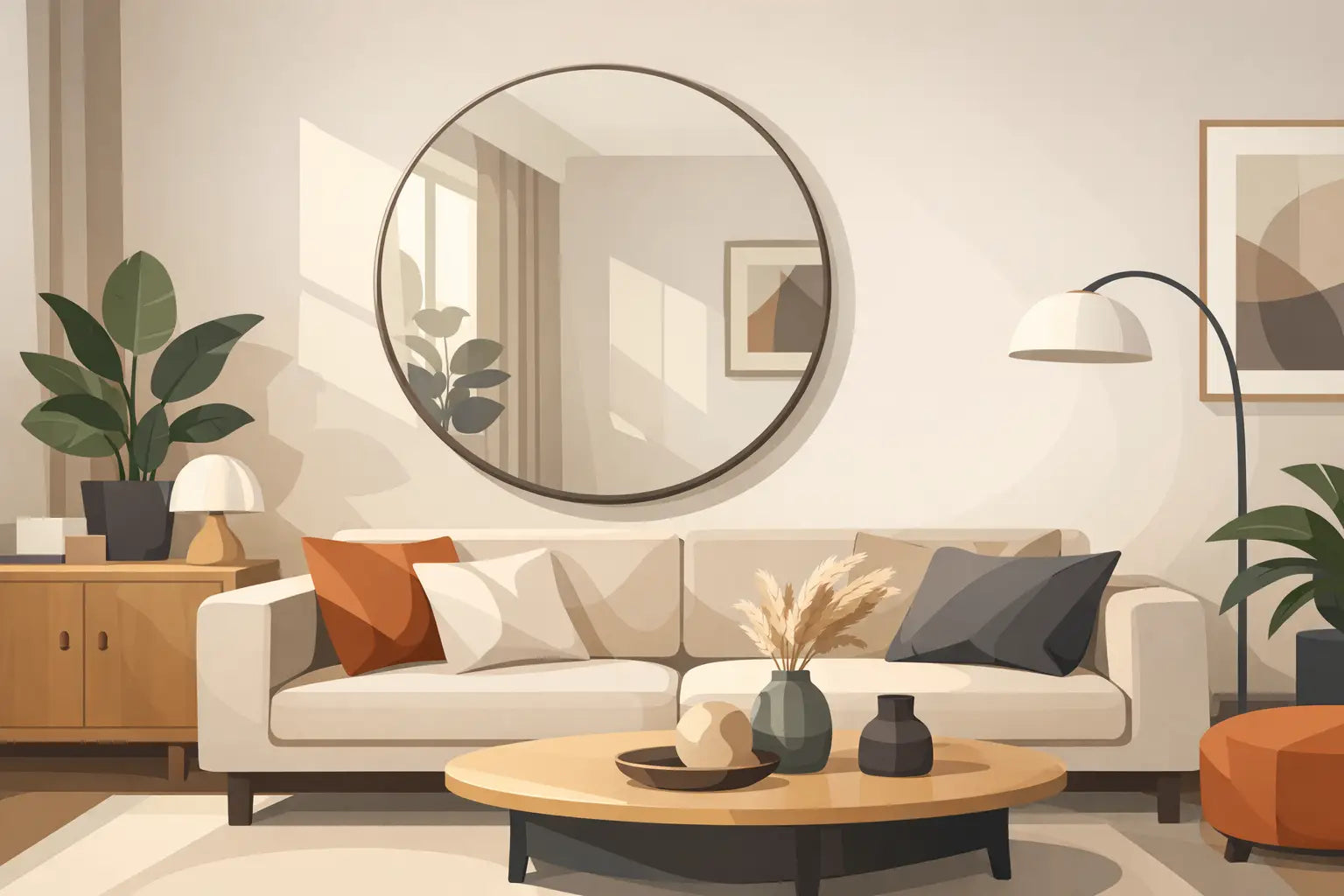
The shape of your mirror determines the atmosphere more than you might think. A round mirror makes a living room softer. Useful if you already have many straight lines, such as a sleek sofa, rectangular coffee table, or angular cabinet. With a round shape, you break that up nicely without it feeling forced.
A rectangular mirror is more classic and often has a slightly stronger presence. It works well in modern interiors, but also in eclectic settings where you like to play with contrast. If you want to emphasize height, choose a vertical mirror. If you want the wall to appear wider, a horizontal model works better.
Organic mirrors are the fun option. A bit more playful, a bit bolder, and perfect if your living room should have character. They take the space out of the predictable and often feel more creative. Especially in an interior that could use some personality, such a shape is a winner.
Large or small? Go one size up
Many people choose a mirror that is actually a bit too small. Understandable, because on paper that size seems fine. On the wall, it suddenly disappears. In the living room, a mirror can certainly have presence.
A large mirror often creates a calmer effect than a small one. That might sound contradictory, but it's true. One generous statement feels stronger than multiple small elements competing with each other. If you have an empty wall where nothing is happening yet, a large mirror can almost function as an art object.
Small mirrors, on the other hand, work well as part of a gallery wall or as an accent above compact furniture. In that case, they should feel consciously chosen. A tiny mirror on a huge wall usually does little for the space and even less for the atmosphere.
Framed or frameless? This is the difference
The frame largely determines the style. Black metal looks sleek and modern. Gold feels warmer, glamorous, and more decorative. Wood makes it softer and more natural. And a striking frame with playful details immediately makes your mirror a statement piece.
Frameless mirrors are calmer and more subtle. They blend more easily into the space and are useful if you already have many outspoken furniture pieces or accessories. If you want the mirror to play a starring role, then a frame with character is often more exciting.
So it depends on what your living room needs. If the space lacks punch, choose a mirror that has something to say for itself. If there's already a lot going on in terms of color, print, or shape, then a simpler model might be the better choice.
How to style a mirror without it looking bare
A mirror alone can be beautiful, but often it gets even better when you incorporate it into a larger style picture. Above a sideboard, you can work with differences in height. Think of a vase with branches, a sculptural object, and a candle holder in a color that matches your cushions or artwork. Then the mirror doesn't feel separate, but part of the whole.
What also works well is combining a mirror with mood lighting. A table lamp in front of it creates a warm reflection in the evening and instantly makes that corner cozier. Candlelight does this fantastically too. This not only gives your living room more light, but also more shine and depth.
If you want to approach it more playfully, opt for contrast. An organic mirror above a sleek piece of furniture. Or a luxurious gold mirror next to a more basic sofa. It's precisely this mix that makes a space interesting and less like a showroom.
Common mistakes with a living room mirror
The biggest mistake is hanging it at the wrong height. Too high feels distant, too low looks messy. As a rule of thumb, you want the mirror to visually align with the rest of your furniture and for the center to be roughly at eye level, unless you consciously choose an oversized floor-standing look.
A second mistake is not considering the reflection. Sounds logical, but it often happens. A mirror that looks out onto cables, an overcrowded corner, or an empty white wall produces little magic. So don't just look at the mirror's placement, but also at the image it reflects.
And then there's the pitfall of too many mirrors. Yes, mirrors create light and spaciousness. But a living room full of reflections can also feel unsettling. Especially if you already have a lot of glossy materials, busy prints, or small accessories. Sometimes one good mirror is exactly enough.
Which mirror suits your living style?
If you have a modern interior, clean lines, black frames, and large sizes usually work well. In a warmer, more natural living room, wood, rounded shapes, and soft tones fit better. If you like eclectic or a bit outspoken, you can play with special silhouettes, shine, color, and unexpected shapes.
In a more minimalist living room, the trick is to choose one mirror that truly fits in scale and finish. In a more playful interior, that mirror can be a conversation starter. That's also where brands like Housevitamin excel: choosing home items that don't quietly blend into the background, but genuinely add something to the vibe of your home.
A mirror is small effort, big effect
Sometimes a living room doesn't need a new sofa, a different paint color, or a complete makeover. Sometimes the space just needs one well-chosen mirror. One that catches light, reflects atmosphere, and makes the room just a little more exciting than it was yesterday.
So take a look at that empty wall, that dark corner, or that sideboard that doesn't feel quite finished yet. Chances are a mirror will make all the difference there – not difficult, but a lot of fun.