Small living room decorating ideas
A small living room can very quickly go two ways: it can feel cozy and stylish, or it can look like everything is just a bit too much. That's precisely why a good example of decorating a small living room is so useful. Not to copy a showroom, but to see how clever choices can bring more atmosphere, peace, and personality into a compact space.
Decorating a small living room starts with choices
The biggest misconception? That a small living room should primarily remain empty. Not at all. A small space can definitely have character. In fact, without decoration, such a room often feels bare, uninviting, and a bit temporary.
What does work is choosing with courage and restraint. So, not ten nice things in ten places, but a few strong accents that together tell a story. Think of a striking vase, a playful candlestick, a mirror with character, or a wall object that immediately sets the tone. In a small living room, every item counts extra. That's not a limitation; it's your opportunity.
Therefore, don't start buying accessories because they are cute. Start with the vibe you want to create. Do you want warm and calm? Then soft tones, round shapes, and subtle gloss often work better. Do you want it to be striking and a bit daring? Then you can play with contrasting colors, sculptural objects, and decoration that really says something.
Think in zones, even if you have limited space
A small living room is still a living room. So you don't have to throw everything together. By thinking in mini-zones, the space feels larger and more logical.
Your seating area is, of course, the base. This usually involves a sofa, coffee table, and perhaps an armchair or side table. Decoration helps create cohesion here. For example, emphasize one visual anchor point, such as the wall behind the sofa or the table in the middle. If you try to make something happen everywhere, the space will lose its tranquility.
Do you also have a windowsill, open cabinet, or narrow wall shelf? Don't see these as separate spots that all need to be filled. See them as extensions of the same style. Repeat a color, material, or shape to maintain a calm look. A black candlestick on the table and a black photo frame on the wall can be enough to make the whole feel intentional.
Color in a small living room: safe is allowed, boring is not necessary
In examples of small living room decorating, you often see a lot of white, beige, or light gray. Logical, because light tones make a space optically more open. But simply choosing safe doesn't automatically make your living room more beautiful.
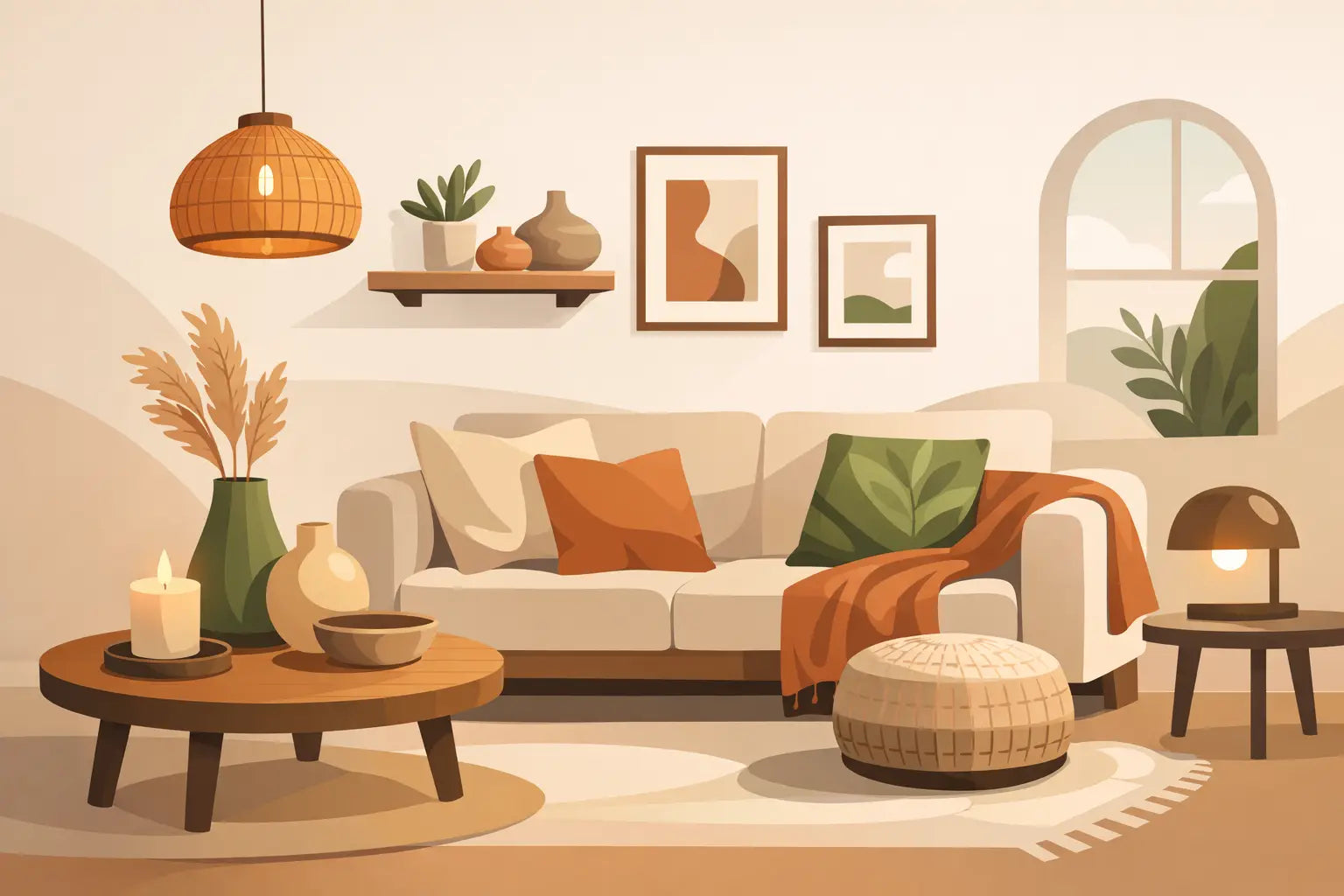
The trick often lies in balance. Keep your base light if you want to maintain as much airiness as possible, then add warmth with accessories. This can be done with sand, terracotta, smoke glass, soft pink, olive green, or glossy gold. Small injections of color immediately add more atmosphere without cluttering the room.
Dark accents can also work wonderfully. A black mirror frame, a deep brown candlestick, or a dark art object creates contrast and makes light elements stand out more strongly. It mainly depends on how much daylight you have. In a space with a lot of natural light, you can add a bit more drama. If your living room is rather dark, keep most of it airy and add depth in details.
Mirrors are not a trick, but a game changer
If there's one item that almost always works in a small living room, it's the mirror. Not just because it reflects light, but also because it does a lot decoratively. A good mirror is both functional and atmospheric. That dual effect is golden in compact spaces.
Don't just hang a mirror in an empty spot because it seems "convenient." Look at what it reflects. If it shows a window, a beautiful lamp, or an atmospheric corner, it visually doubles precisely what you want to emphasize. If it reflects clutter, a boring wall, or a messy corner, you'll get the opposite effect.
The shape also makes a difference. Round mirrors soften a sleek space. Organic shapes make it more playful. A larger mirror often has more impact than three small accessories combined. Especially in a small living room, that's smart: fewer individual stimuli, more statement.
Wall decoration: go for impact, not for filler
Many people treat their walls last. First the furniture, then something on the wall. A shame, because vertical styling helps tremendously when your floor space is limited.
A good rule of thumb: prefer one strong piece of wall decoration over a collection of small, unrelated items. A poster, art print, wall object, or decorative clock can immediately set the mood. That provides direction. Small accessories on furniture then automatically feel more thought out.
If you want to combine several things, maintain one line. For example, only black and white, only warm tones, or only round shapes. This keeps it chic instead of busy. In a compact living room, that difference is huge.
Accessories can stand out, as long as they add something
This is where it gets fun. Small living rooms are perfect for accessories with personality, as just a few pieces can make a big impact. A striking candle holder, a sculptural vase, a scented candle with beautiful packaging, or an ornament with humor can instantly transform the space from standard to unique.
But beware: striking is not the same as random. Choose items that contribute to color, height, texture, or atmosphere. A glass vase catches light. A matte pot adds serenity. A metallic accent provides shine. A playful object breaks up a conservative styling.
What works less well is a lot of small decoration without function or visual hierarchy. That quickly leads to that cluttered shelf effect. Prefer three accessories that truly do something over nine that just take up space. Less, but make it fun.
Texture makes small spaces richer
If you don't have much space for large furniture or striking arrangements, atmosphere must come from details. Texture is your best friend then. A smooth ceramic vase, a glossy candlestick, a ribbed pot, or soft fabrics in cushions and throws ensure that a small living room feels layered.
This is important, because a compact space with only flat surfaces can quickly become cold. Especially if you use neutral colors. Texture fills that gap without adding visual chaos.
Therefore, consciously mix materials. Glass with ceramics. Metal with textiles. Matte with glossy. Not everything has to come from the same style corner, as long as it feels good together. It is precisely this mix that makes an interior lively.
Styling of table, cabinet and windowsill
The easiest way to upgrade a small living room? Work with small styling moments. You don't have to overhaul everything immediately. A coffee table, dresser, or windowsill can be enough to make the entire space look fresher.
On a coffee table, a simple combination often works best: something tall, something low, something practical. For example, a vase, a candle, and a bowl. This makes it look styled, but still usable. On a windowsill, you can play with height differences and light reflection, for example with glassware or candlesticks.
An open cabinet requires a bit more discipline. Clutter is immediately visible there. So don't let every shelf be full. Alternate decoration with empty space. That provides peace and makes beautiful items stand out better. If everything demands attention, ultimately nothing wins.
Lighting is also decoration
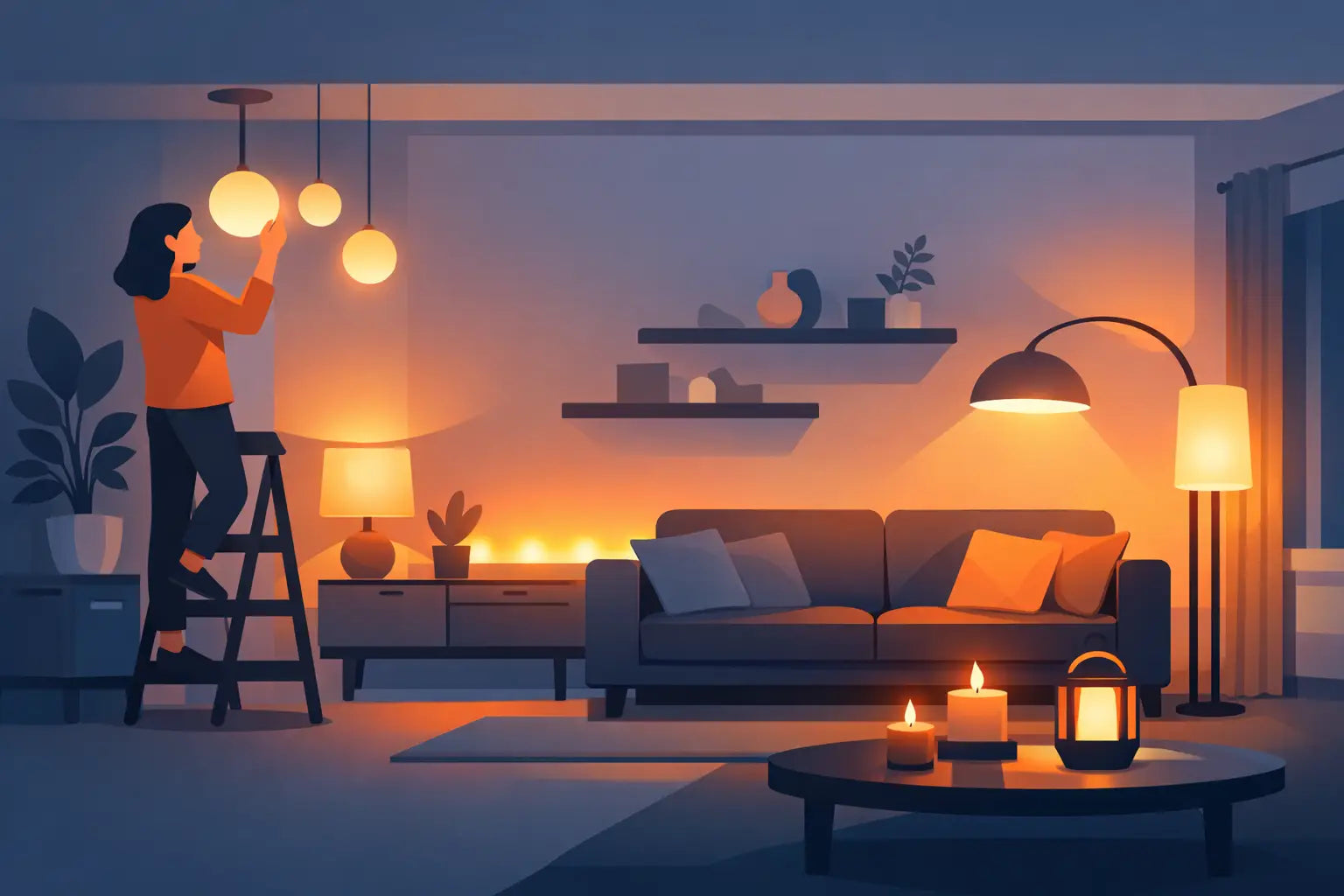
In small living rooms, lighting is often underestimated. Yet a table lamp, mood lamp, or candlelight does an enormous amount for the ambiance. Bright ceiling light rarely shows a room at its best. Layered light does.
Therefore, choose multiple soft light sources rather than one harsh one. A small lamp on a cabinet, an atmospheric table lamp next to the sofa, or candlesticks on the table immediately make the room warmer. During the day, these are also decorative objects. In the evening, they pull the entire living room together.
If you have limited space, choose lighting that is slender but has character. A lamp doesn't have to be big to bring style. Sometimes a striking base or unusual shape does all the work.
A realistic example of decorating a small living room
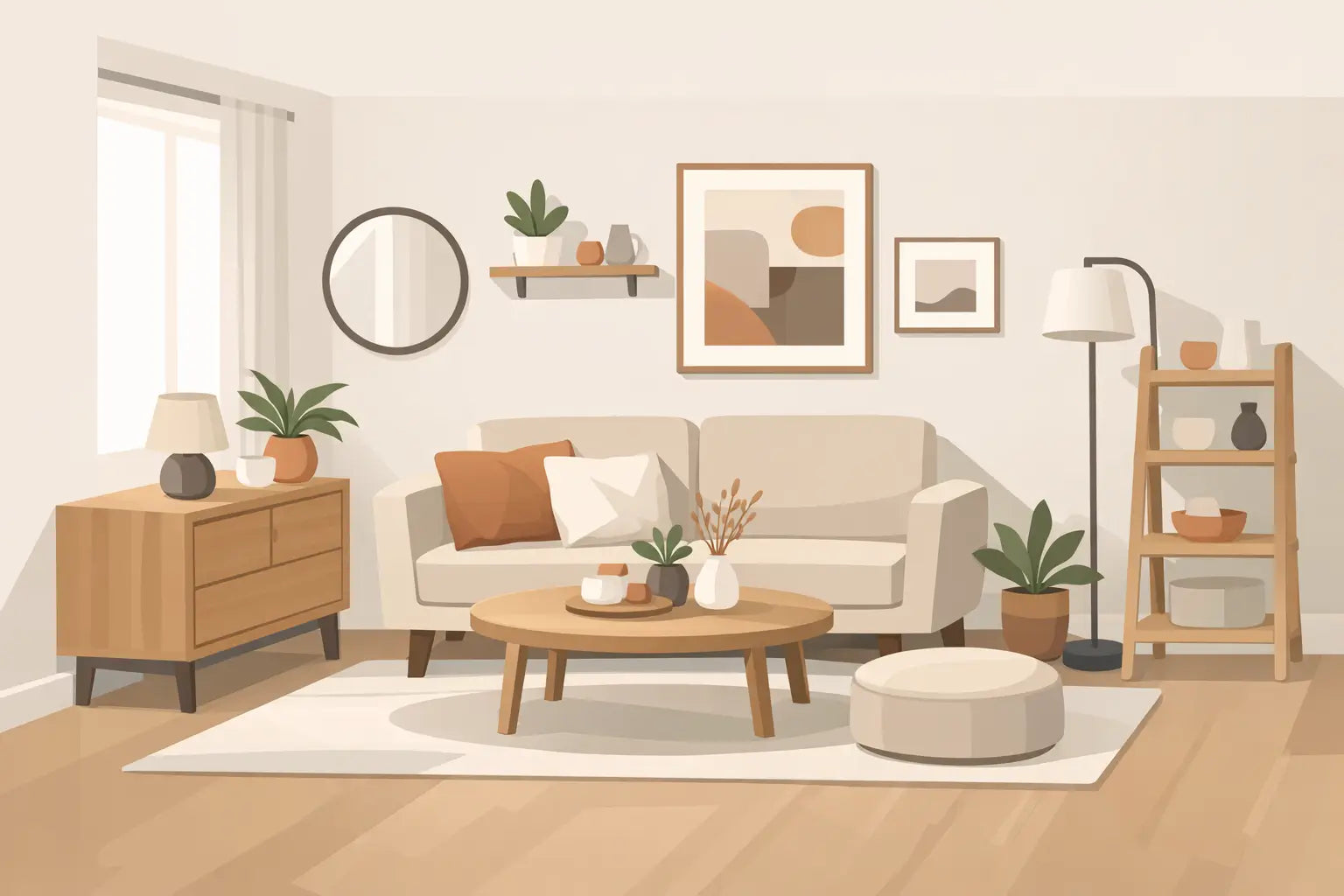
Suppose you have a small living room with a light sofa, a compact coffee table, and a neutral base. You don't need to fill the entire space to make an impact. Hang an organic mirror on the wall, place a striking vase on the table with a few branches, add a candlestick in a contrasting color, and incorporate a throw or cushion in a warm tone.
On a dresser or shelf, place a group of three items of different heights, for example, a clock, a scented candle, and a decorative object. No more. This keeps it airy. Then add one playful detail that makes the space a little less serious. That's often precisely where style and coziness meet.
At Housevitamin, this approach fits perfectly: not a bland showroom look, but an interior with humor, atmosphere, and items that truly enhance the space.
Small living doesn't demand less style
A small living room never has to feel like a compromise. If chosen well, it feels more strongly styled than a large space where everything seems to disappear. The secret is not less decoration, but better decoration. Items with form, atmosphere, and presence always win over mere filler.
So, if you're wondering where to start, start small but smart. Choose one corner to make cozier, more stylish, or bolder today. Chances are, the rest will follow naturally.