How do you style a sidetable?
Your sidetable is often one of those places that in theory sounds fabulous and in practice ends up with mail, keys, and a stray candle. That's a shame, because if you're wondering how to decorate your sidetable, it really comes down to one thing: turning a forgotten piece of furniture into a real mood-setter. When styled well, a sidetable immediately draws attention, without looking busy or contrived.
A sidetable is also not a cabinet that you "just fill." It's a stage. In the hallway, living room, or behind the sofa, this piece of furniture works well precisely because it's narrow and requires little floor space, yet can make a grand statement in terms of appearance. That's why it pays to think a little more about composition, height, and the mix of functional and decorative elements.
How to decorate a sidetable without a cluttered effect?
The biggest mistake is placing too many small items next to each other. This doesn't create styling, but visual noise. A beautifully styled sidetable feels airy, even with multiple items on it. You achieve this by working in groups and not giving everything equal attention.
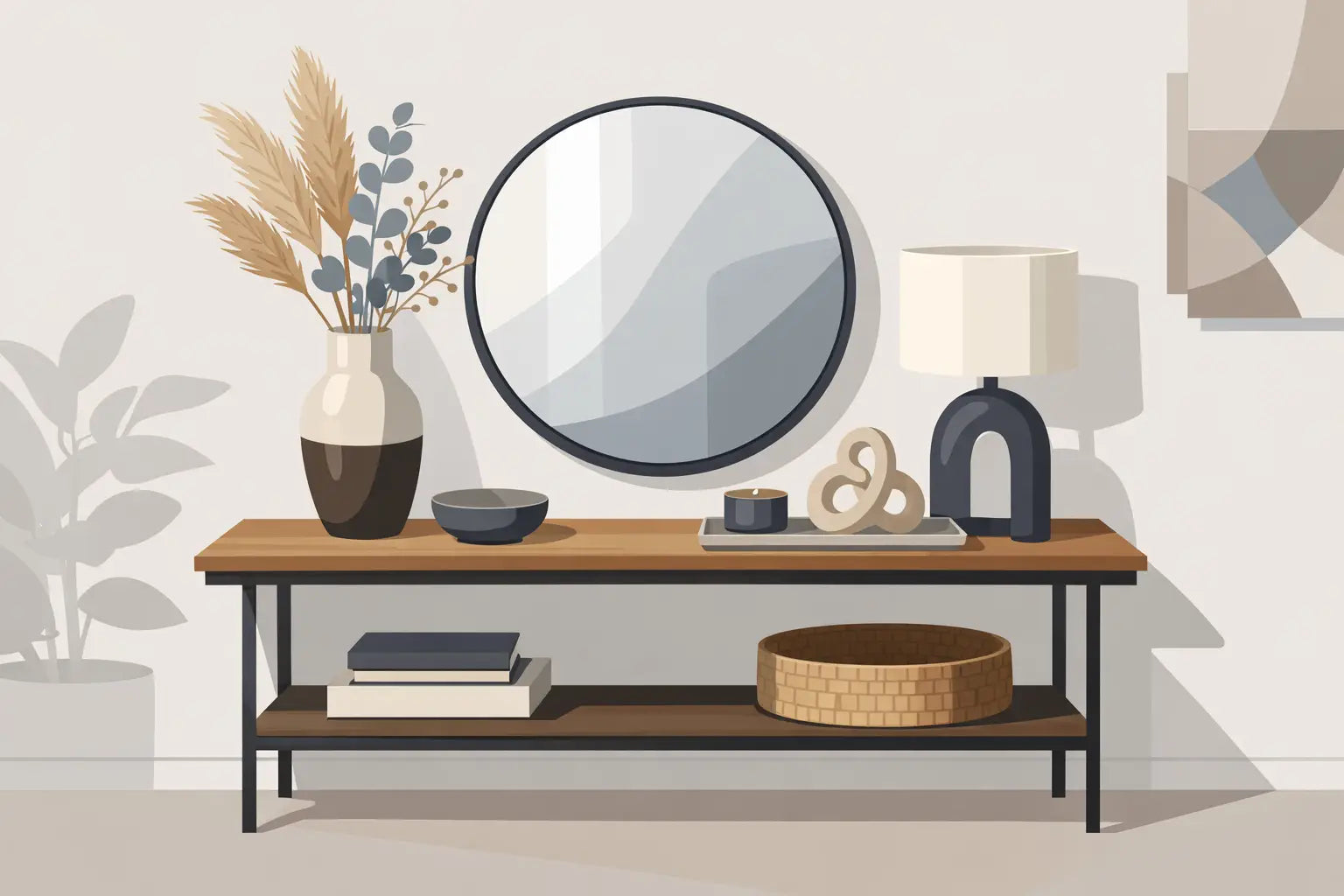
Start with an anchor point. This is usually a larger focal point such as a mirror, a striking vase, a table lamp, or an art object. Such an item immediately gives the sidetable direction. Then, add accessories that support the overall look instead of competing with it.
Think in layers. A tall candle holder next to a low bowl, a stack of books with an ornament on top, a vase with branches behind a smaller scented product – these differences are precisely what make it exciting. If everything is the same height, it looks flat. If everything is equally prominent, it becomes restless.
Start with the function of the space
Before you start moving accessories around, first look at the room. A sidetable in the hallway requires something different than a sidetable in the living room or dining room. This sounds logical, but it's where things often go wrong.
In the hallway, it can be a bit more practical. You want atmosphere and convenience there. A bowl for keys, a reed diffuser, and a mirror above it work better than just decoration. In the living room, you can be more adventurous and opt for aesthetics. Think of candles, objects, books, and vases that primarily add character.
Behind a sofa, a sidetable is another story. Visibility from multiple sides is important there. Styling that only looks good from the front will fall short. In such a case, choose items that are interesting from all angles, such as sculptural candle holders, organic vases, or a lamp with a beautiful shape.
Work with height, but don't overdo it
Good styling almost always involves varying heights. This creates rhythm and prevents everything from feeling like a row on a shelf. However, height must remain proportionate to the furniture and the wall above it.
If you have a tall mirror or large artwork above the sidetable, you don't need to add extreme height to the surface itself. A medium vase with flowers or branches is often enough. If the wall is quite bare, you can create a bit more drama on the sidetable itself with a lamp or tall candle holder.
The trick is balance. One tall item is often stronger than three medium-height items together. Give such an item space. It's precisely the emptiness around it that makes it chic.
The 60-30-10 feeling for styling
You don't have to work with measuring tapes, but a simple distribution helps. Allow about 60 percent of the styling to be calm and basic, 30 percent to add atmosphere, and 10 percent to surprise. This means, for example: a mirror and lamp as a base, a vase and candles for warmth, and one quirky object or playful detail that makes it personal.
That last 10 percent does a lot. A bold candle holder, a sculpture with humor, or a pot in an unexpected color gives your sidetable character. And that's precisely what prevents it from looking like a soulless showroom.
Don't just choose beautiful things, but also the right mix
If everything is decorative, the styling often lacks credibility. If everything is functional, it becomes boring. The most appealing sidetables fall somewhere in between.
Therefore, combine different types of accessories. A vase provides shape, candles provide atmosphere, a bowl provides function, and a mirror or poster creates impact at eye level. Optionally, add something soft, such as a small stack of coffee table books with warm tones, so that the overall look isn't too harsh.
Materials also play a big role. Glass reflects light and keeps things airy. Ceramics feel softer and earthier. Metal adds shine. Wood makes it warm. It's the mix that makes a sidetable exciting. Too much of one material can quickly become flat, unless you consciously go for a very minimalist look.
Color: targeted rather than random
A sidetable is small enough to play with, but large enough to reveal color mistakes. So don't just put five nice accessories together because you like them individually. Look at the color story.
The easiest route is to work with two or three main colors. For example, black, cream, and an accent color such as olive green, burgundy, or soft pink. This makes it look coherent, even if the shapes are pronounced. If you want more punch, add one contrasting item. One. Not four.
If you already have a lot of color in the room, keep the sidetable calmer. If the room is quite neutral, the sidetable can be the place where things get interesting. That's the beauty of this piece of furniture – you can quickly add atmosphere without having to restyle an entire room.
How to style your sidetable if you like striking designs?
Then still with both brake and gas. A striking style doesn't mean everything has to be loud. Choose one statement piece that really steals the show and keep the rest supportive. A funky vase, a mirror with an unusual shape, or a playful ornament is often enough.
Let that statement breathe. So, no full collection of small trinkets around it, but calm items that enhance it. This is precisely what makes it look trendy instead of chaotic.
Think in odd numbers and visual groups
Styling usually looks better when items are not spread out over the surface like isolated islands. It's better to work with two or three compositions. For example, a lamp with a small bowl on one side, some space in the middle, and a vase with a candle holder on the other side.
Odd numbers often work well because they look more natural. Three candle holders of different heights feel more exciting than two identical ones. But that's not a rule. Sometimes one strong object on an almost empty sidetable is much more powerful, especially in a modern space.
It also depends on the size of your sidetable. A narrow model can't handle much. A simple combination often works better there than an elaborate setting. A wider sidetable can support more layers, as long as you don't try to fill every bit of surface.
Don't forget the wall above it
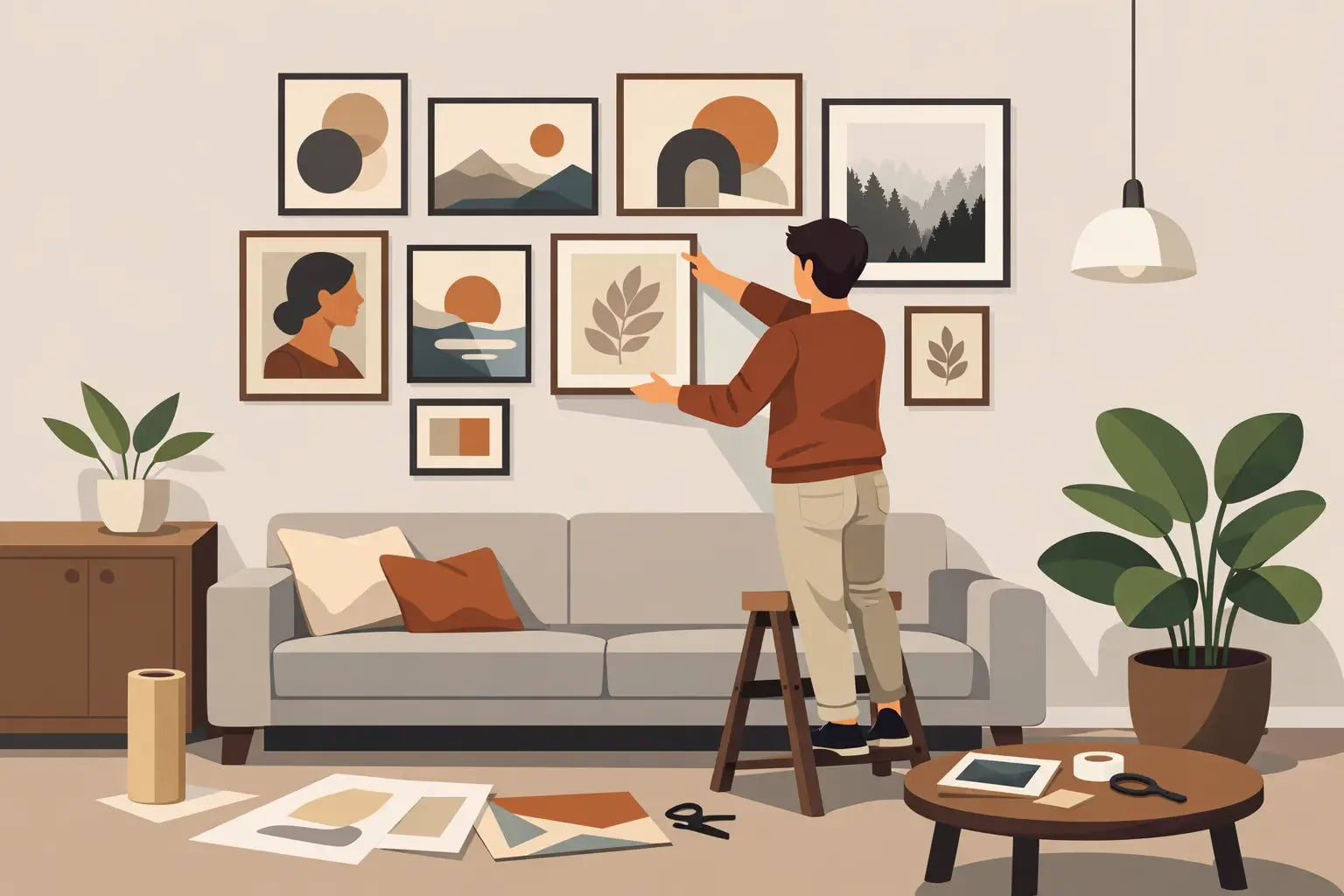
A bare wall above a styled sidetable can feel unfinished. Conversely, a busy artwork above busy styling can be too much. Those two need to work together.
A mirror is almost always a smart choice, especially in the hallway. It catches light, makes the space feel more open, and immediately gives a luxurious feel. Art or posters work well if you want more personality. Choose something that fits in size. Too small above a wide sidetable looks lost.
If you want it to be more playful, don't hang everything exactly in the middle if that doesn't make sense with your styling. A slightly asymmetrical arrangement can look more modern, as long as the overall balance is maintained.
Seasonal styling works if your foundation is good
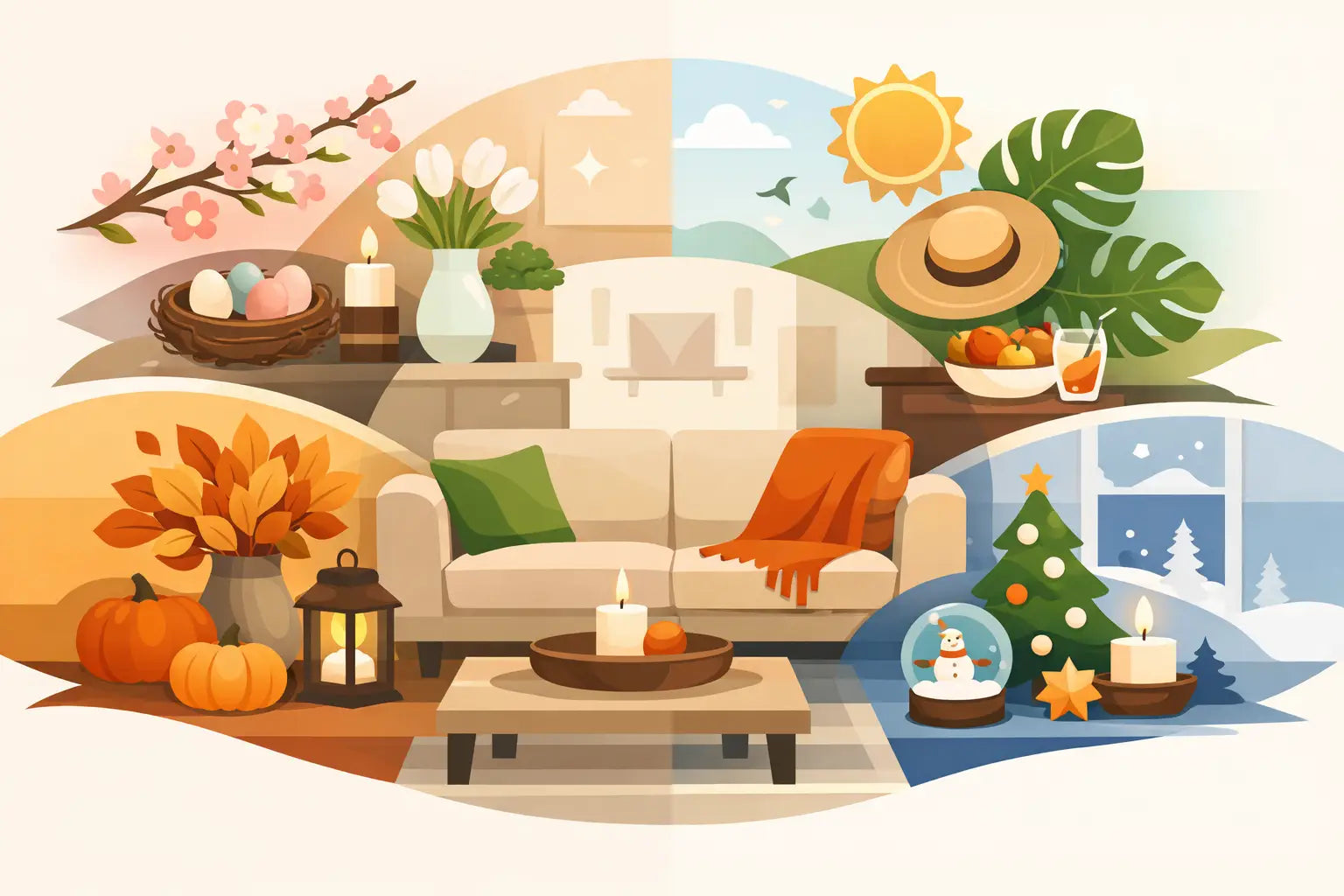
The nice thing about a sidetable is that you can easily change things without a lot of hassle. A few candles in deeper hues in autumn, a fresh vase with blossom branches in spring, some sparkle during the holidays – small updates already make a difference.
But don't let every season ruin your entire styling. Keep a consistent base of one mirror, lamp, or bowl and only change the accents. This keeps it calm and your interior doesn't feel like it has to start over every month.
For those who like atmosphere with a wink, this is also the place where you can show a bit more fun. A striking candle holder or playful decorative object does exactly what it needs to do here. Housevitamin understands this game very well: an accessory can definitely bring a smile, as long as it still adds style.
What you better not do
Stuffing a sidetable is the quickest way to lose its effect. Also, pushing everything against the back edge without creating depth makes it boring. And be careful with too many mini-items. Individually they are cute, together they quickly become dusty and cluttered.
Also practical: be careful with items that are too fragile in a place where you often walk past, especially in a hallway. Beautiful styling is nice, but not if you have to straighten something every week. Sometimes less is not only more beautiful, but also smarter.
If you get stuck, first remove everything and start over with three things: something tall, something functional, and something atmospheric. From there, you can build up. That surprisingly often works better than endlessly rearranging too many accessories at once.
A good sidetable doesn't have to be perfectly styled. It should say something about your taste, make the space more beautiful, and feel pleasant as soon as you enter. If you succeed in that, you're doing well – even if those keys end up there again sometimes.